TRUSTWORTHY SATELLITE-DERIVED DATA
Interoperable satellite-derived data
Keep scrolling to discover
Please Rotate Your Device
for a better experience
The ESA Fiducial Reference Measurements (FRM) Workshop, at NPL on 18–19 May 2026, brought together the Cal/Val community to share practical examples of FRM activities across disciplines and stages of development.
Through short presentations and focused discussion sessions, participants explored challenges, lessons learnt, and pathways towards FRM classification and labelling. Guided by seed questions, the workshop informed ESA and the wider international community about potential evolutions needed to support rapid uptake of FRM criteria while minimising additional cost and effort.
To complement the FRM workshop a half-day training/discussion workshop on the afternoon of 20 May will be led by NPL on the organisation/analysis of comparisons. Comparisons with peers and/or similar facilities are a key mechanism to evidence the achieved uncertainty from Cal/Val activities and this workshop will provide and discuss EO related examples to illustrate and discuss the comparison and associated analysis/reporting process.
For details and about how to preprare slides for dicussions, see: Comparison Workshop, a space to share how comparisons between satellite datasets and Fiducial Reference Measurements are carried out in practice.
On 21 & 22 May, NPL will lead a 1.5-day training course on uncertainty analysis and the use of a suite of open-source software tools to aid the analysis. Although the workshop will start from first principles it is recommended that participants undertake a free on-line course that will be available from late April, registered attendees will be contacted. The workshop will look to work through both set examples in a hands-on manner via participants' own computers and NPL experts will also look to use/discuss participant provided examples where possible.
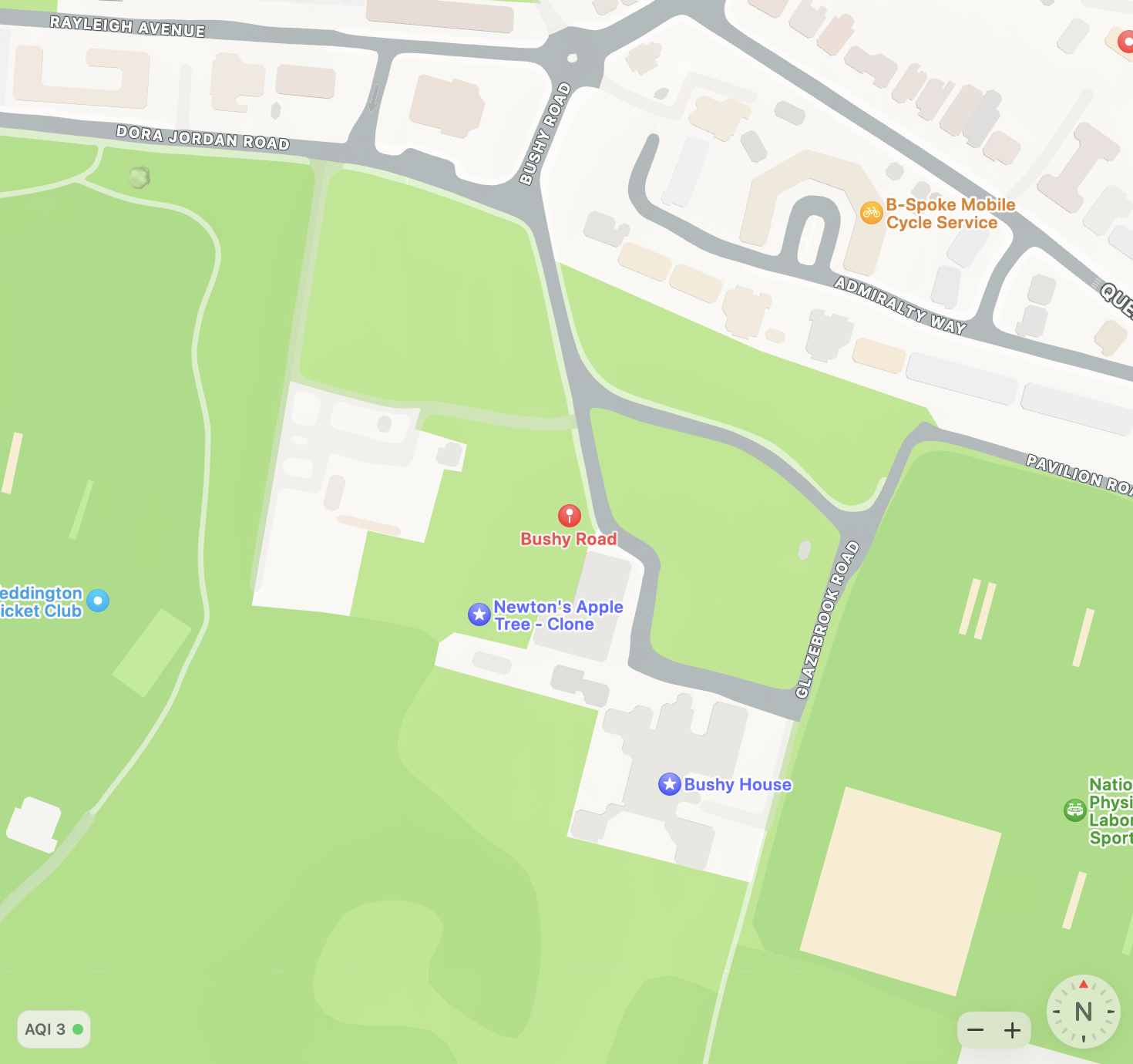
IQST, National Physical Laboratory, Bushey Road, Teddington, TW11 0EB, UK
| Day | Time | Session |
|---|---|---|
| Mon 18 | 12:30–13:15 | Registration, tea & coffee |
| Mon 18 | 13:15–13:30 | Welcome to NPL, practicalities and aims of the meeting (Nigel Fox) |
| Mon 18 | 13:30–14:45 | Introductory presentations about FRMs and QA Framework • The journey of an FRM (Philippe Goryl – 45 min) – FRM categories, project types, status and workshop content • The CEOS-FRM tool / portal (Paolo Castracane – 30 min) |
| Mon 18 | 14:45–15:15 | Break |
| Mon 18 | 15:15–16:50 | • FRM4VEG (Harry Morris – 15 + 5 min) • FRM4Fire (Bernardo Mota – 15 + 5 min) • GBOV (Rémi Grousset – 15 + 5 min) • FRM4SM (Alexander Gruber – 15 + 5 min) • Discussion (15 min) |
| Mon 18 | 16:50–17:30 | Subgroup definitions (5 min); breakout group discussion (40 min) |
| Mon 18 | 17:35–19:00 | Icebreaker with hosted drinks & nibbles / poster presentations |
| Tue 19 | 08:30–09:00 | Registration and tea / coffee |
| Tue 19 | 09:00–10:35 | • FRM4SST (Ruth Wilson – 15 + 5 min) • QA4SAR (Alberto Sanchez Rabaneda – 15 + 5 min) • TirCalNet (Darren Ghent – 15 + 5 min) • FRM4ALT (Stelios Mertikas – 15 + 5 min) • Discussion (15 min) |
| Tue 19 | 10:35–11:00 | Break |
| Tue 19 | 11:00–12:15 | • St3TART (Eva Le Merle – 15 + 5 min) • FRMs for the Atmosphere domain (Jean-Christopher Lambert – 15 + 5 min) • FRM4GHG to COCCON experience and evolution (Mahesh Kumar Sha – 15 + 5 min) • Discussion (15 min) |
| Tue 19 | 12:15–13:45 | Lunch + walk and talk |
| Tue 19 | 13:45–15:45 | • RadCalNet (Morven Sinclair – 15 + 5 min) • LANDHYPERNET (Pieter De Vis – 15 + 5 min) • QA frameworks and EDAP (Sam Hunt – 15 + 5 min) • FRM applied to non-satellite datasets (Emma Woolliams – 15 + 5 min) • FRM Data for the Copernicus Programme (Sébastien Clerc – 15 + 5 min) • Discussion (20 min) |
| Tue 19 | 15:45–16:15 | Break |
| Tue 19 | 16:15–17:30 | Breakout group discussion Part 2 |
| Day | Time | Session |
|---|---|---|
| Wed 20 | 12:30–13:45 | Buffet lunch and registration |
| Wed 20 | 13:45–14:00 | Welcome to NPL, practicalities and aims of meeting |
| Wed 20 | 14:00–15:00 | Show-and-tell on how we present comparisons to satellites • Please pre-send examples of graphs used to show agreement and discrepancies with satellite data • These will be organised and presented to encourage a discussion about tests used to compare FRM with satellites |
| Wed 20 | 15:00–15:30 | Break |
| Wed 20 | 15:30–16:00 | Show-and-tell continued |
| Wed 20 | 16:00–17:00 | Discussion session to derive recommendations for reporting comparisons |
Lunch and refreshments will be provided for participants on all days except Monday and Friday. On Monday there will be an ESA-hosted Icebreaker and on Tuesday and Thursday evenings a non-hosted dinner at the King's Head and Anglers Pub respectively. For the latter two we require an advance payment. More details on selecting menus and the payment of these will be shared with the participants in the near future.
For all NPL events we aim to accommodate specific needs and personal circumstances, but are reliant on individuals sharing this information with us. If you have any specific requirements or adjustments to support your attendance (whether in person or virtual), please do let us know by emailing events@npl.co.uk, so that we can discuss how we can best support you. Any information shared will be confidential and deleted after the event.
What is the shared and accepted definition of FRM and the relevance of the prefix ‘CEOS’, what evidence and minimum requirements are needed to claim CEOS-FRM status, and how can this concept be translated in a consistent and systematic manner across different missions? Is the understanding of ‘class ABCD’ of CEOS-FRM compliance understood and useful? Are these definitions/concepts applicable to all primary levels of products (e.g. Level-1 and Level-2)?
How can we ensure coherence, comparability and transparency of CEOS-FRMs across different missions, domains and projects? How should inter-consistency be addressed in FRM-related activities, in terms of systematically planning cross-checks e.g. comparisons and improving visibility and coordination of parallel FRM efforts?
How and what CEOS-FRM activities, datasets and best practices be centralised and communicated to improve awareness and uptake across the wider community, including centralised information resources and better exploitation of lessons learned, to inform future CEOS-FRM development and operations? Should missions explicitly require CEOS-FRM compliance for Cal/Val activities?
What are the key gaps and challenges in establishing, sustaining, and prioritising CEOS-FRMs across technical, organisational, financial, and representativeness dimensions, and how should future investments balance consolidation of existing CEOS-FRM initiatives with the development of new sites, regions, domains?
How should FRM compliance categories within the CEOS FRM framework be strengthened (covering maturity assessment, uncertainty requirements, QA and comparison practices, publication, measurand definition, and cross-domain consistency) while remaining fit for purpose across different application domains and to support consistent FRM implementation? Should there be minimum requirements for categories such as achievable uncertainty?
How can synergies and partnerships be strengthened across agencies, industry, and the wider CEOS-FRM international community to improve coordination, consistency, participation, and long-term sustainability, including appropriate incentives and funding pathways for both public and commercial missions, and to ensure a coordinated and sustainable CEOS-FRM development and use that meets the Cal/Val needs of the missions?
How can the impact of CEOS-FRM be demonstrated? What metrics and verification procedures are needed to systematically assess the impact of CEOS-FRMs on Cal/Val activities, mission performance, and downstream services?
Can and should the CEOS-FRM framework evolve to extend its value beyond space applications, engaging non-space user communities, and encompassing different historic quality-assurance approaches? Is there a value in a FRM classification and/or label beyond space applications e.g. WMO networks and Copernicus in situ, and how can this relate to CEOS-FRM? Is it largely just removing the ‘explicit space requirements’ in the criteria?
Conclusions and next steps agreed during the workshop will be shared here.